


Thailand-Cambodia War: Why an Ancient Temple Has Triggered Fresh Tensions Between the Two Nations
New Delhi | December 10, 2025
A sharp military escalation along the border has once again placed the Thailand-Cambodia war dispute under global scrutiny. At least 11 people, most of them civilians, were killed in intense clashes on Thursday, marking one of the deadliest flare-ups in recent years between the two Buddhist-majority nations.
For decades, Thailand and Cambodia have disagreed over sections of their 800-kilometre frontier. While sporadic exchanges of fire have occurred in the past, the latest incident—featuring small arms, artillery rounds, rockets, and reported airstrikes—has raised concerns of a prolonged confrontation. The renewed hostilities erupted near the ancient Ta Muen Thom temple, located between Thailand’s Surin province and Cambodia’s Oddar Meanchey province.
Ancient dispute turns violent again
The core of the Thailand-Cambodia war narrative centres on historical claims to temple complexes situated on rugged border terrain. The 11th-century Ta Muen Thom temple, like several others in the region, stands on contested land where mapping and demarcation disagreements have persisted since the 20th century.
Thai authorities stated that the confrontation began after troops spotted a drone over their border post, shortly before six Cambodian soldiers allegedly moved toward the area. Thailand claims it responded after detecting what it described as a potential attempted breach. Cambodia, however, has accused Thai forces of firing the first shots and escalating the situation without provocation.
The contradictory versions have fuelled diplomatic tensions, with both sides calling for restraint but continuing to mobilise troops along sensitive points. While Thursday’s clashes were brought under partial control by evening, officials warned that the situation remained volatile.
A long history of conflict over temples
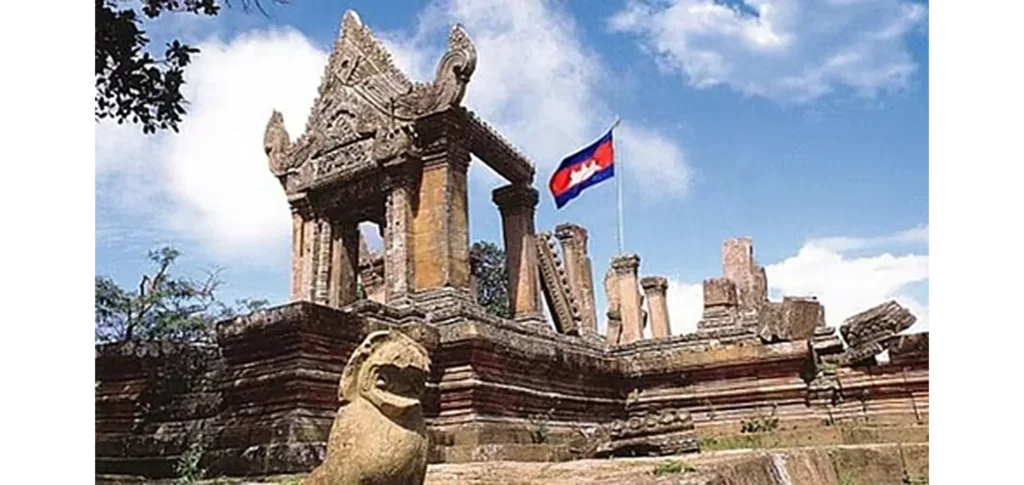
The Thailand-Cambodia war dispute over historical temples is not new. The most prominent case involves the Prasat Preah Vihear temple, a UNESCO World Heritage Site. Although the International Court of Justice (ICJ) awarded the temple to Cambodia in 1962, disagreements lingered over adjacent land. Subsequent military engagements occurred in 2008, 2011, and several times afterwards, each triggered by soldiers patrolling disputed zones.
Ta Muen Thom, Thursday’s flashpoint, is part of the same network of ancient temple structures from the Khmer Empire era. The archaeological sites often lie along ridge lines or forested terrain where border markings are unclear. Despite joint border committees and several rounds of diplomatic talks, the two neighbours have struggled to establish a mutually accepted demarcation.
Officials and analysts note that the temples themselves are not the only source of contention. Beyond cultural heritage, the surrounding territory holds strategic military significance. Control over ridge lines, roads, and forested trails offers tactical advantages, which both countries consider vital for their national security.
Regional concerns and diplomatic implications
The escalation has alarmed regional observers who fear that any widening of the Thailand-Cambodia war tensions could affect Southeast Asian stability. ASEAN has previously attempted to mediate between the two nations, though with limited success. Renewed violence may prompt fresh calls for international involvement if diplomatic efforts fail to calm the situation.
Both governments have urged civilians living near the border to stay indoors or move to safer locations. Local markets, schools, and transport routes have been temporarily closed. Humanitarian organisations have warned of possible displacement if the clashes intensify.
Security experts say the situation requires urgent de-escalation. With neither side willing to concede territorial claims, only sustained diplomatic engagement can prevent a prolonged cycle of violence. A joint investigation into the latest incident, coupled with confidence-building measures, has been recommended to ease mistrust.
A fragile calm amid unresolved tensions
As of Friday morning, firing had largely subsided, but the underlying causes of the Thailand-Cambodia war dispute remain unresolved. Both nations continue to stress that they want peace, yet maintain that protecting their territorial sovereignty is non-negotiable. Analysts caution that without a clear, mutually agreed border settlement, the risk of future clashes remains high.
The temples at the heart of the dispute are symbols of shared heritage, yet they continue to trigger confrontation instead of cooperation. Whether the latest violence becomes an isolated incident or the beginning of a wider conflict will depend on how Bangkok and Phnom Penh navigate the coming days.
For now, the border remains tense, soldiers remain on alert, and the ancient temples stand as reminders of a dispute that neither nation has been able to fully settle.